The Rise of Social Commerce
Competing with Platform Giants
Social commerce isn’t just another sales channel – its combination of entertainment, product discovery and seamless buying interface make it a powerful force that is reshaping logistics. Surveys show four out of five (82%) social users engage in shopping-related activities when using social and entertainment platforms, with one in three saying these platforms are now their preferred channel for product discovery.

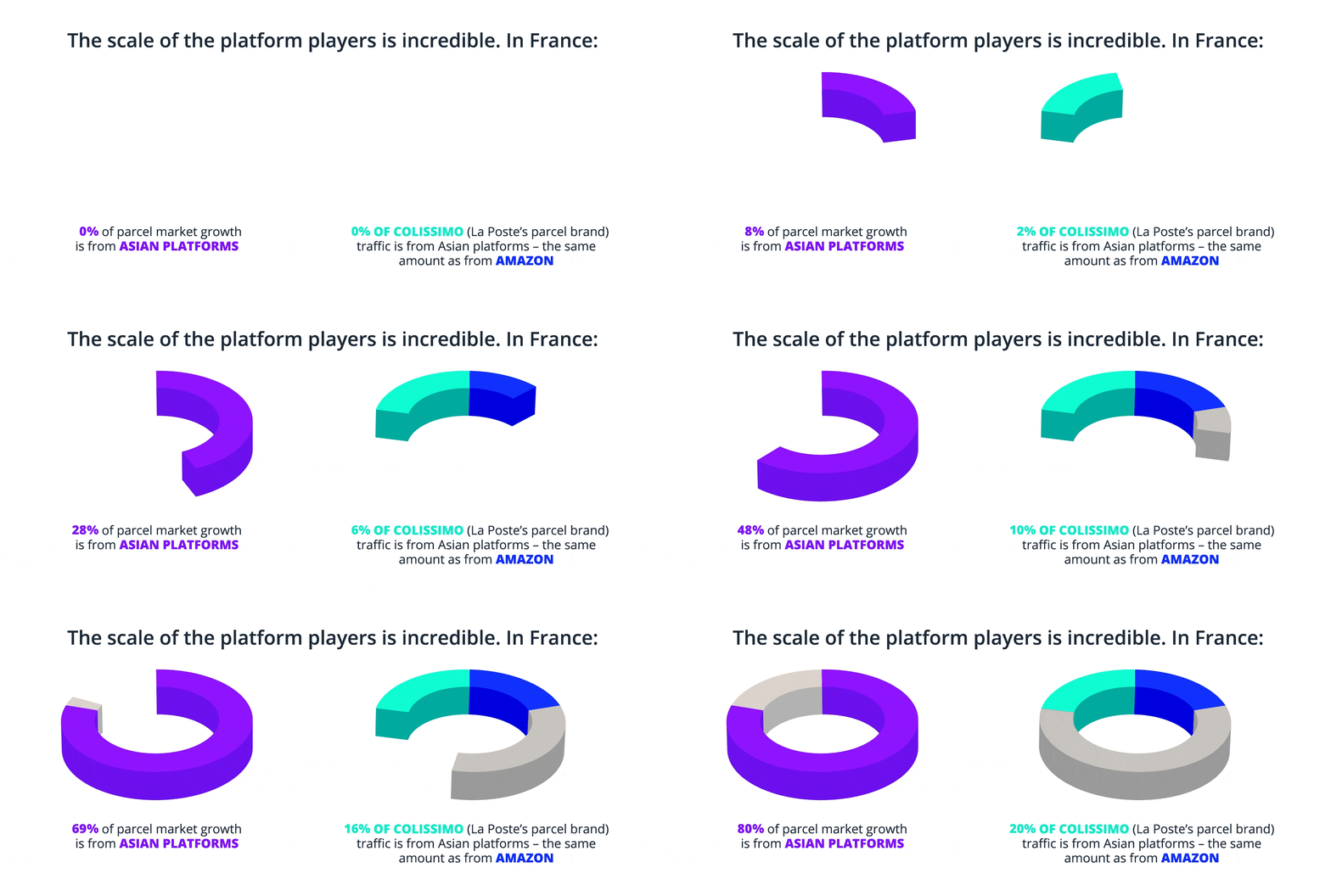
For logistics operators, this shift introduces three distinct operational pressures: First, extreme demand spikes. Viral moments can turn obscure products into global bestsellers within days, creating sudden surges in volume that traditional planning cycles are not designed to absorb. Second, structural volatility. Beyond individual spikes, demand becomes fundamentally less predictable. Product lifecycles compress from seasons to weeks, making forecasting less reliable and capacity planning more complex. Third, distorted returns flows. Behaviours such as ‘wardrobing’ – where consumers purchase for content creation and return – are becoming normalised, increasing reverse logistics costs and leaving retailers with stranded inventory. The scale of this shift is already visible. In France, for example, 80% of parcel market growth is now driven by Asian platforms such as Alibaba, Shein, and Temu. Together, they generate volumes equivalent to around 20% of Colissimo’s traffic, which is roughly on par with Amazon’s contribution to La Poste’s rapid parcel delivery network.
For European logistics players, the immediate implication is clear: these flows are too large (and they’re growing even larger) to ignore. Capturing them has become a strategic priority.This urgency is already shaping behaviour. Partnerships between incumbents and marketplaces – such as La Poste’s collaboration with Temu – reflect an attempt to secure access to these volumes. At the same time, operators are adapting networks and capacity to accommodate the surge in cross-border flows. However, this window may be narrowing. Chinese marketplaces are not just generating demand: they are increasingly building the infrastructure to serve it themselves. Players such as Temu, SHEIN, and Cainiao are investing in European warehousing, securing carrier capacity, and developing fulfilment networks that reduce reliance on traditional cross-border models. This creates a strategic paradox for incumbents: the same flows they are racing to capture are simultaneously being internalised by the platforms that generate them. Regulatory changes are likely to accelerate this shift. De minimis reforms, already underway in the US and expected in Europe, are pushing marketplaces toward bulk import models. Cainiao’s hub at Liège Airport illustrates this approach: goods are flown in at scale, cleared once, and then distributed locally. This transition from B2C to B2B2C logistics enables platforms to bypass per-parcel duties, reduce costs, and exert greater control over fulfilment. Crucially, these players enter with a structural advantage: control over demand data. As Nils Thiesen, CCO of Overland Transport at Rhenus Logistics notes, they can ‘manipulate the demand and then accordingly plan the supply chain.’ This ability to synchronise demand creation and fulfilment further reduces reliance on external logistics providers.
Nils Thiesen, CCO of Overland Transport at Rhenus Logistics discusses the strategic advantage of the platform players.
Traditional e-commerce logistics built for predictable patterns can’t handle this volatility. Logistics today has to have ‘extreme flexibility’ built into the supply chain, with dynamic warehouse slotting for trending SKUs, microfulfilment capabilities and the ability to scale rapidly up and down

On the one hand, there will be more M&A activity in this very fragmented market, with the likes of DHL and FedEX driving consolidation. On the other, we will see the rise of specialists - companies that differentiante through value-added services such as fulfilment, customs clearance, and orchestration.
Elke Segers
Executive vice president transformation, strategy & performance cross border
Landmark global


These are not competing strategies so much as different responses to the same structural shift—each with its own logic, advantages, and constraints. One response is scale-driven. Large integrators and carriers continue to optimise for density, cost efficiency, and network reach, leveraging consolidation and operational excellence to defend and grow volume. This model remains highly effective in segments where reliability, coverage, and unit cost are the primary decision drivers. At sufficient scale, these networks retain strong advantages in asset utilisation and service consistency. However, they are increasingly exposed to shifts in volume composition, particularly as large marketplaces internalise fulfilment and exert downward pressure on pricing. A second response is emerging around specialisation and orchestration. Rather than competing primarily on cost, these players focus on enabling more complex, less predictable supply chains—particularly those shaped by cross-border flows and social-driven demand.
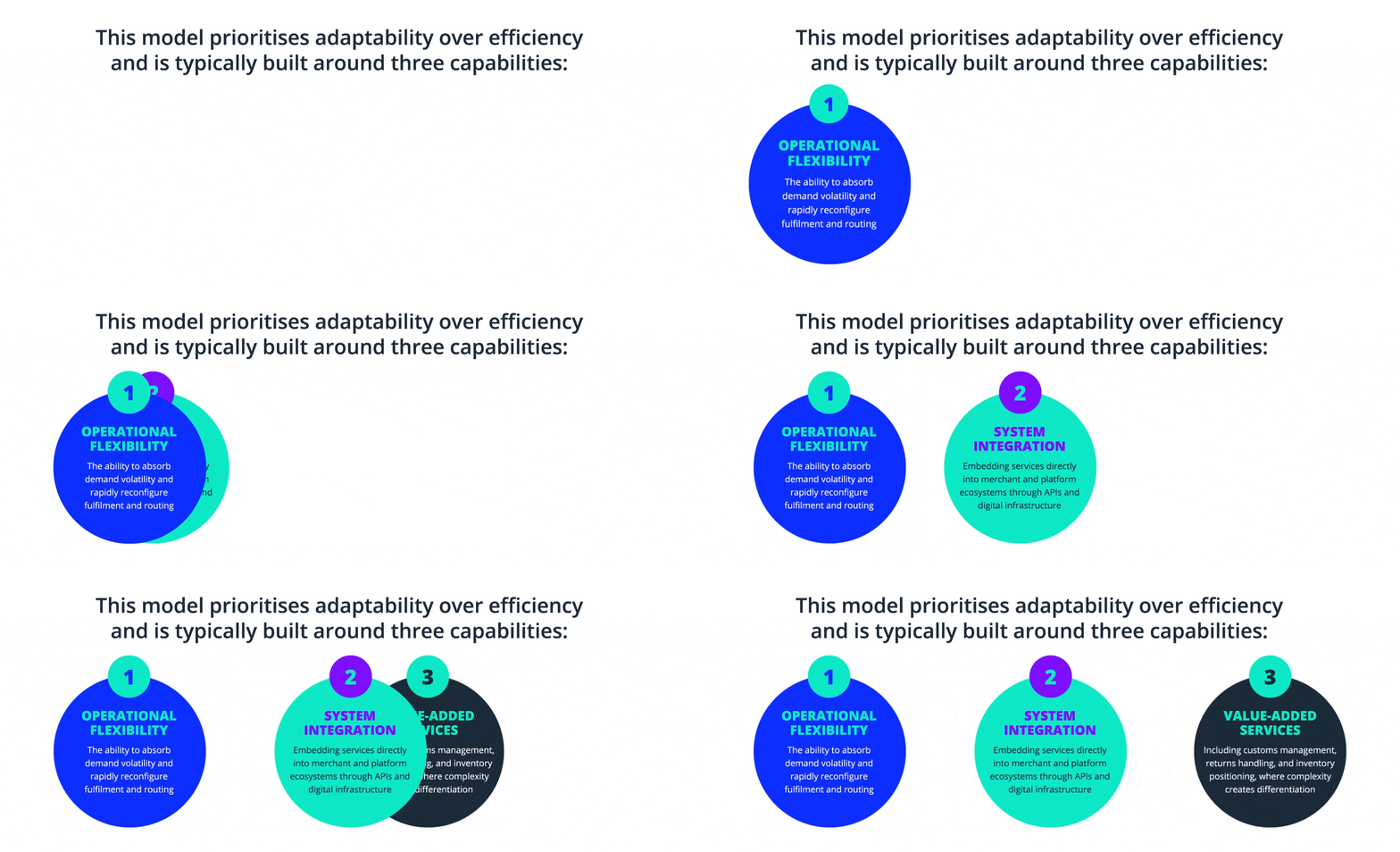
Players such as Landmark Global exemplify this approach, positioning around flexibility and digitally enabled cross-border services rather than pure price competition. Similarly, GXO Direct reflects a move toward modular, plug-and-play logistics solutions, enabling smaller merchants to scale quickly without building dedicated infrastructure. These models illustrate how logistics providers can operate further upstream in the value chain, particularly in environments where demand is fragmented and fast-moving.The distinction between these two paths is less about superiority and more about alignment with different market dynamics. Scale-driven models are optimised for stability, volume and cost efficiency. Specialised models are optimised for variability, integration and complexity. As social commerce and cross-border flows continue to grow, both are likely to coexist – serving different segments of the market and, in some cases, intersecting within the same supply chains.For European players, the challenge is not to converge on a single model, but to make deliberate strategic choices about where they compete.Speed, flexibility, and data-driven orchestration are no longer differentiators but a baseline requirement in this new ‘shop-tainment’ world. For European players, the window to adapt is narrowing rapidly.



Speed, flexibility, and data-driven orchestration are no longer differentiators but a baseline requirement in this new 'shop-tainment' world. For European players, the window to adapt is narrowing rapidly.
Get in touch

Ellie Kennedy
Senior Business Development Executive,
Leaders in Logistics
Stay in the loop with Leaders in Logistics
Subscribe to our newsletter to receive news,
updates and special offers.
By submitting this form you agree to our Privacy Policy and Terms & Conditions