PRICING INNOVATION
– Escaping the Race to the Bottom
Parcel carriers are increasingly trapped by the very growth they enabled. Surging volumes drove rapid network expansion, but that expansion has outpaced the industry’s ability to operate efficiently. The result is a structurally imbalanced system: excess capacity in some areas, bottlenecks in others, and cost bases that are increasingly misaligned with volatile, fragmented demand.
At the same time, the platform economy has fundamentally reshaped demand. Amazon has normalised near-instant fulfilment, Temu is accelerating price deflation, and social commerce is introducing sharp, unpredictable spikes in volume and returns. Fragmented, multi-channel volumes mean scale is now less valuable than flexibility and collaboration.
This shift is reflected in industry sentiment. Nine in ten shippers and carriers now cite cost reduction as their primary challenge, far outweighing speed or service. Meanwhile, reverse logistics has become a central cost driver, placing additional strain on already stretched networks. It is therefore unsurprising that 63% of operators now view margin erosion as a critical threat.
Similar dynamics are evident in warehousing, where margins of just 2–3% leave little room for error. According to Clare Bottle, Chief Executive, UK Warehousing Association, the solution is to capture additional revenue through a shift towards value-added services, with more activities from up and down the supply chain now focused in the warehouse, from packing and assembly to the servicing the circular economy.
Postal operators face an even steeper challenge. Legacy networks are being forced to adapt to parcel-driven, return-heavy flows while still operating under regulatory constraints and high fixed labour costs. Even as Universal Service Obligations evolve, the fundamental mismatch between legacy infrastructure and modern demand continues to erode profitability.
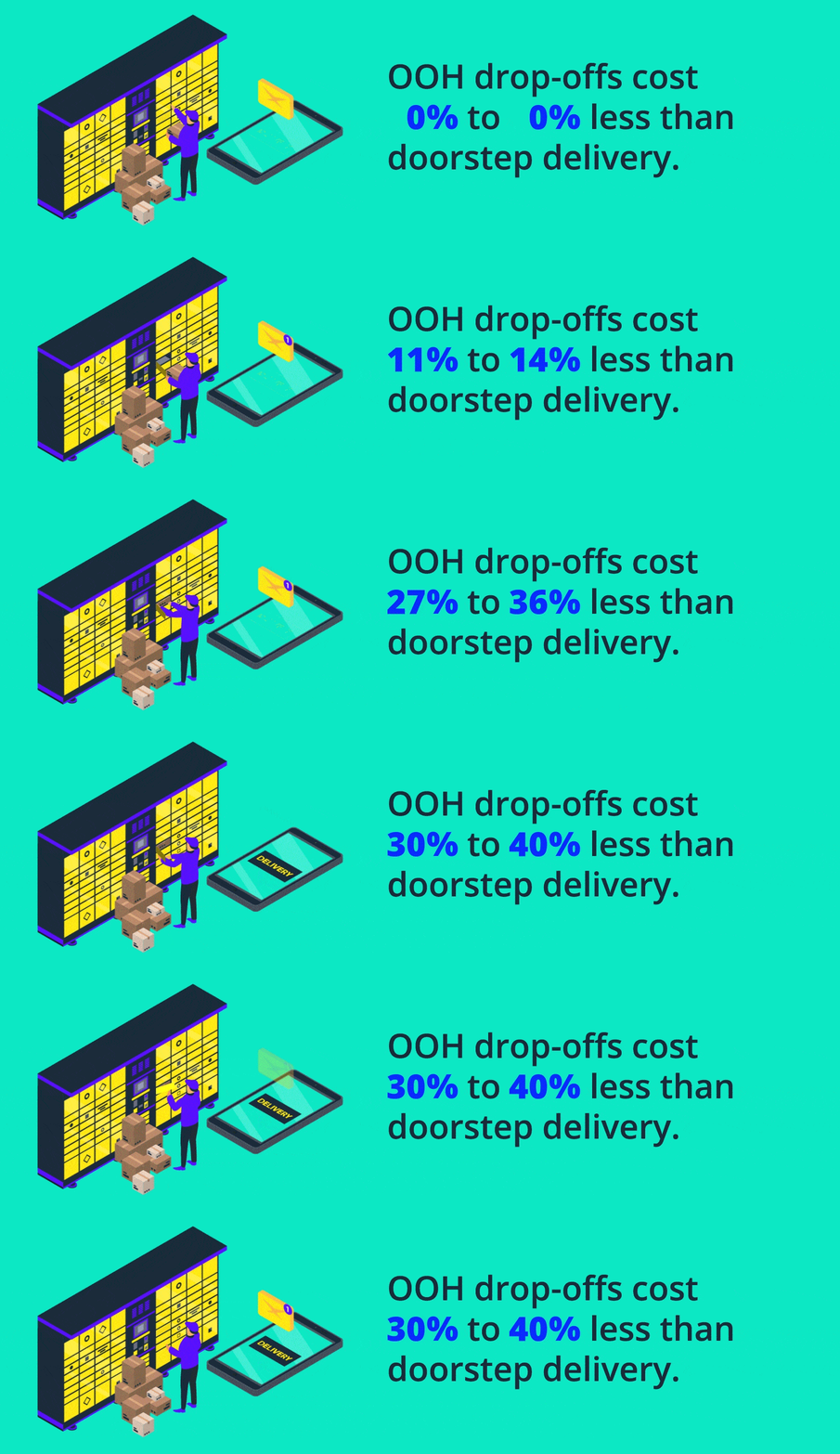
Change is underway: out-of-home solutions restore density and improve efficiency in the most expensive part of the network. AI route optimisation can reduce miles and optimise fleet utilisation while warehouse automation can streamline and lower labour costs. These solutions are, however, still emerging and not yet at a consistent scale to have a material impact on per unit economics.
Sven Kukemelk, CCO of Omniva explains the necessity for dynamic pricing.
This is where the industry’s centre of gravity is beginning to shift. Pricing is no longer just a commercial lever, it is becoming a mechanism for actively shaping network behaviour.
As Karl Pfaff, CEO of GLS Group, notes, lockers can reduce delivery costs by up to 50% at scale but require significant investments in infrastructure and the gains in cost are quickly competed away if pricing declines in parallel. In other words, efficiency without pricing discipline simply accelerates commoditisation.
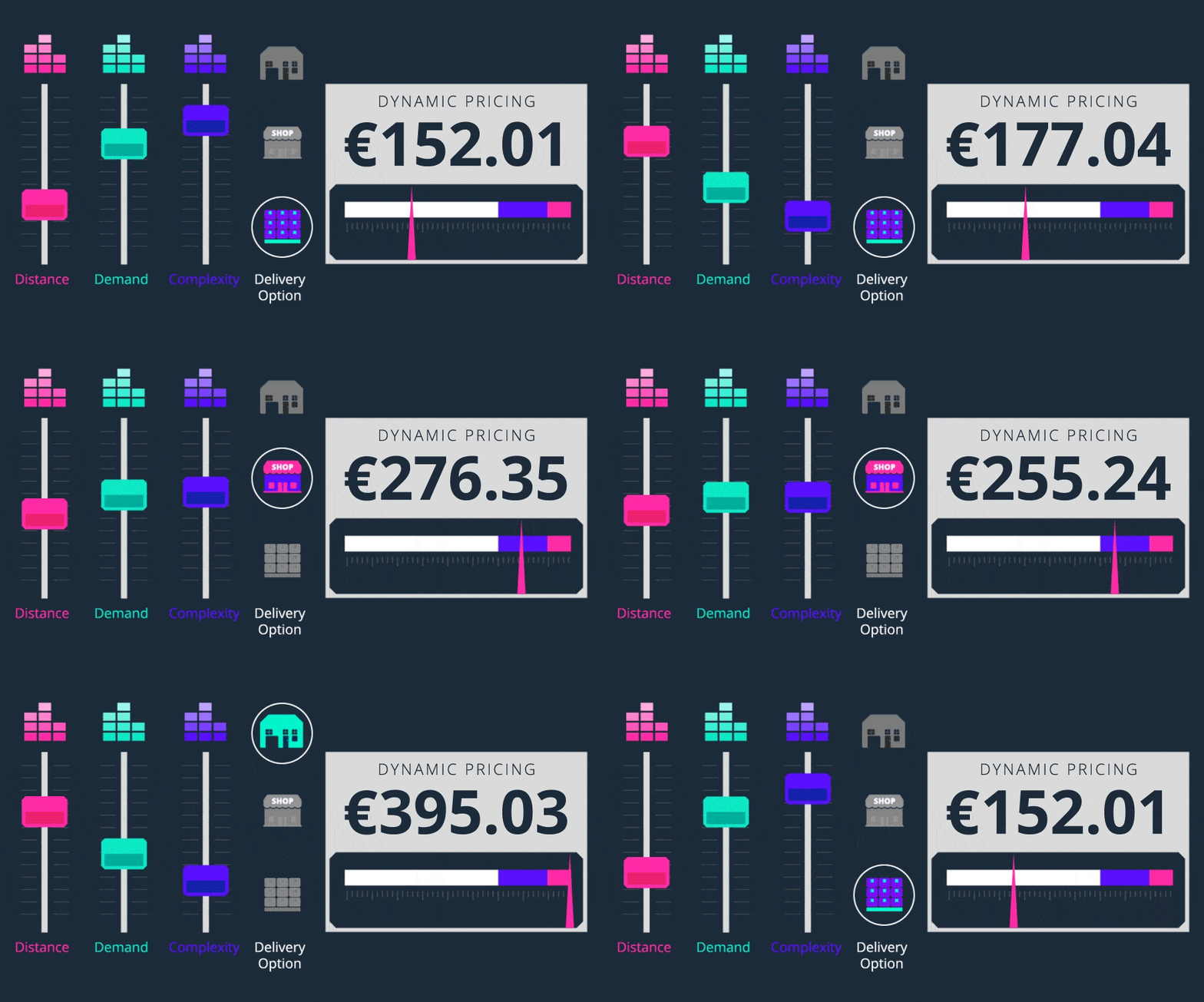
To break this cycle, carriers must move towards cost-reflective, behaviour-driven pricing. That requires granular, real-time visibility into cost drivers so that pricing can accurately signal the economic impact of different choices. With this foundation in place, pricing can be used to rebalance the network: incentivising delivery to lower-cost channels such as OOH, shifting volume to off-peak periods, and discouraging behaviours that create disproportionate operational strain, such as excessive returns or last-minute demand surges.
Early signs of this shift are already visible. Retailers are moving away from blanket free returns, particularly for high-frequency returners, while carriers are introducing differentiated service tiers and peak surcharges. Dynamic pricing models, long standard in industries such as airlines, are beginning to emerge, allowing capacity to be allocated more efficiently and smoothing demand volatility. For example, Royal Mail introduced a peak surcharge to cover the busiest months of the year around Christmas in 2023.

However, this transition introduces
new challenges
Pricing complexity must be matched by transparency. According to BCG, nearly half of shippers describe current pricing as only “somewhat transparent,” driving the adoption of multi-carrier strategies and shorter contract cycles. Without clear, data-driven justification, more sophisticated pricing risks undermining trust rather than strengthening it. Digitisation is therefore critical. Standardised APIs, real-time dashboards, and integrated data platforms enable both carriers and shippers to understand cost, performance, and trade-offs in real time. This transparency not only supports more effective pricing but also opens the door to new forms of value differentiation.
Beyond core delivery, carriers have an opportunity to monetise specialised capabilities such as temperature-controlled logistics, white-glove services, customs expertise, and increasingly, data and analytics insights. These offerings shift the conversation away from price per parcel towards value delivered per transaction.
Crucially, customer behaviour suggests the market is ready for this shift. One study found that 61% of consumers are willing to pay more for delivery options that match their specific needs, while others show a clear willingness to trade speed for affordability. Flexibility, not uniformity, is becoming the defining feature of customer expectation.
The implication is clear: the industry’s long-standing reliance on uniform, volume-based pricing is no longer fit for purpose. In a fragmented, demand-driven environment, value is contextual and pricing must reflect that.
The shift is already underway. The question is no longer whether pricing will change, but which players will use it to redefine the economics of the industry.


The shift is already underway. The question is no longer whether pricing will change, but which players will use it to redefine the economics of the industry.
Get in touch

Ellie Kennedy
Senior Business Development Executive,
Leaders in Logistics
Stay in the loop with Leaders in Logistics
Subscribe to our newsletter to receive news,
updates and special offers.
By submitting this form you agree to our Privacy Policy and Terms & Conditions