Out-of-Home Networks
The Science of Proximity
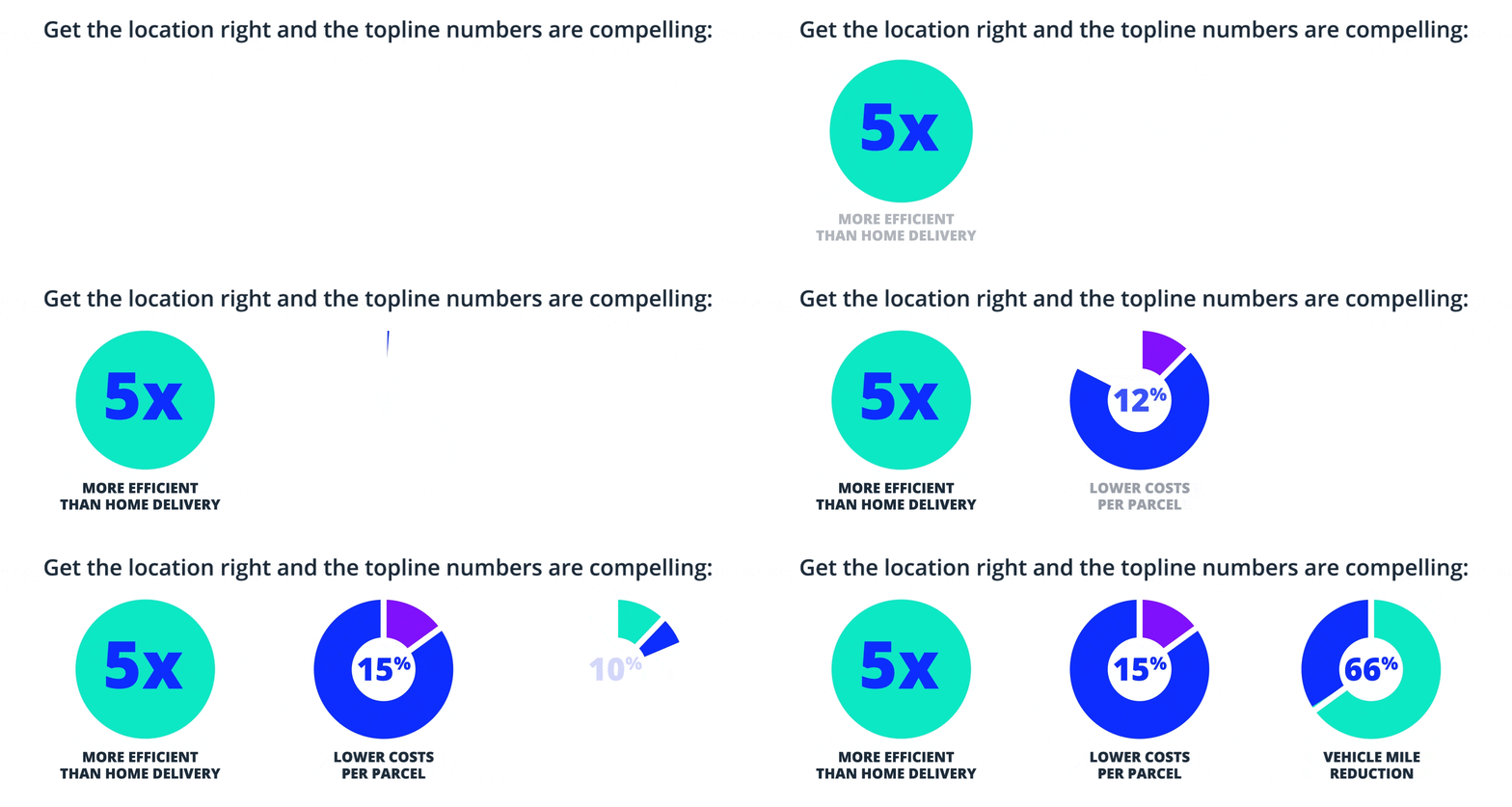
When it comes to out-of-home logistics, location science is everything. From the locker banks that have sprouted across cities to PUDO shops, proximity matters. Get the location right and the topline numbers are compelling: five times more efficient than home delivery, 66% vehicle mile reduction and 15% lower costs per parcel.
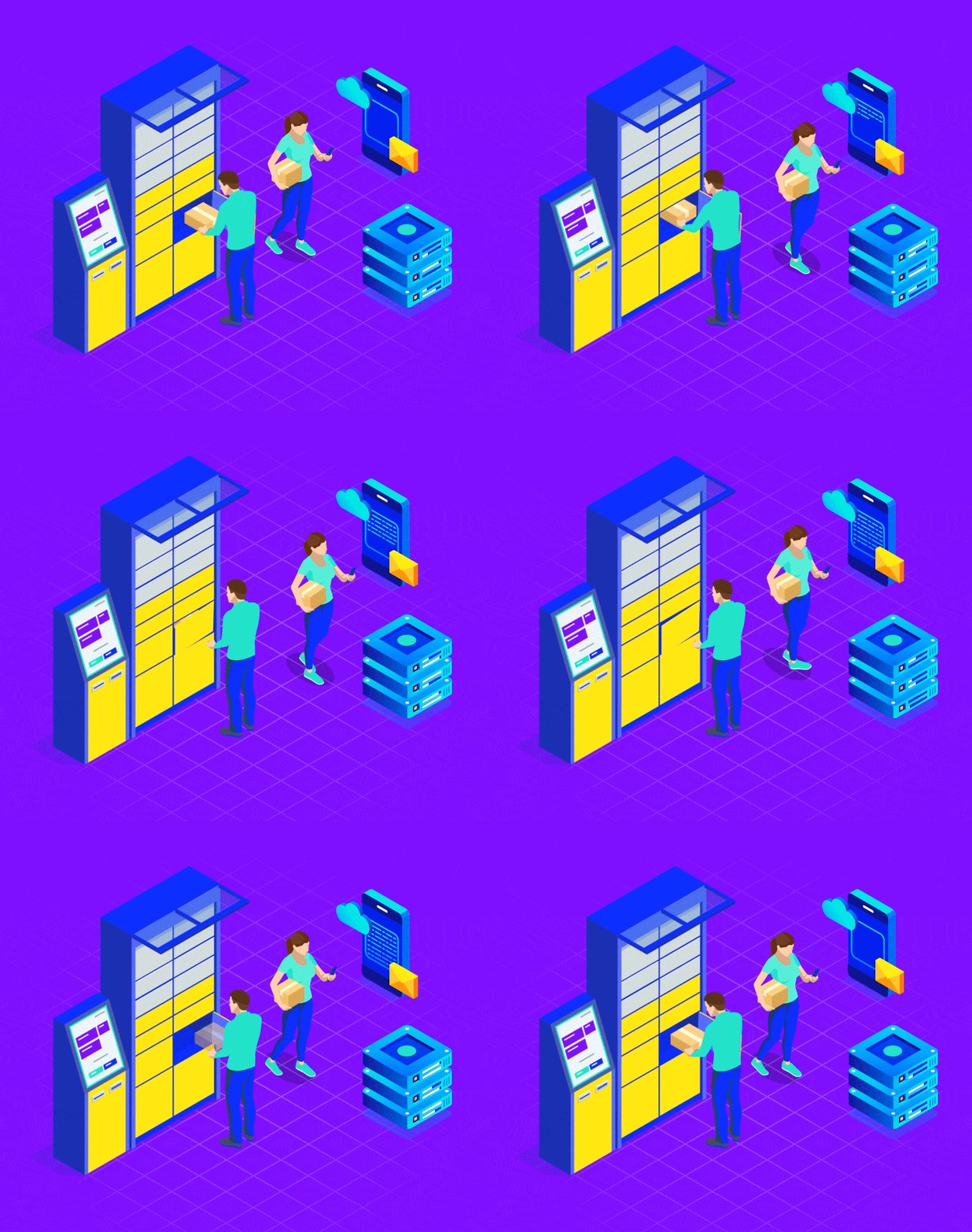
Capturing these efficiencies, though, involves much more than simply installing a bank of lockers in a busy precinct. Deploy in the wrong locations and you have expensive infrastructure nobody uses. Deploy without understanding the end-to-end customer experience and you create negative experiences. This was the experience of PostNL when it first launched its locker business and found growth was below expectations. ‘We realised we had fallen in love with our perfect locker solution but we hadn’t understood the problem we were trying to solve,’ said Harm Schokker, Deputy Director, Retail BeNeLux at PostNL.It went back to basics to understand the pain points across the OOH ecosystem - the e-tailer, the location partner, the delivery person and the end consumer.

We made it visible that every participant within our ecosystem influences the other party in the ecosystem and that by working together and focusing on the experience we can really sell OOH as a solution and have great revenue for PostNL.
Harm Schokker
Deputy Director, Retail BeNeLux,
PostNL

The biggest learning is the importance of location. Everyone's happy until the PUDO is over 500 meters from home. Research from bpost, the Belgian operator, found that six minutes is the limit of a customer’s proximity tolerance. Get it right, and adoption can be very high in a high density country like Belgium, with Laurens Himpe, bpost’s Chief Automated Parcel Officer reporting that OOH surged from 18% to 33% adoption in the space of a year as the postal operator tripled capacity.
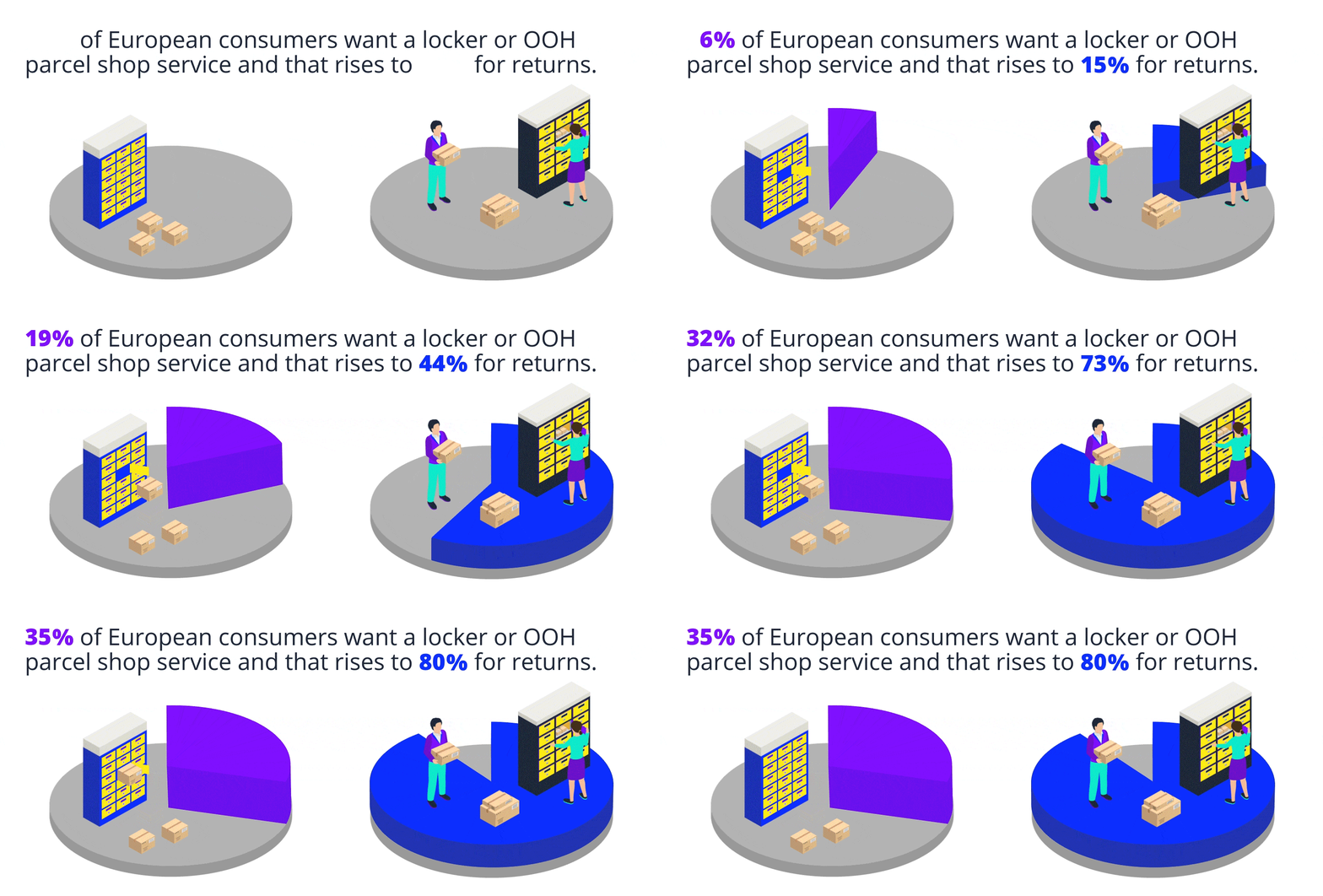
‘The magic happens where the highest consumer demand meets the most difficult supply chain,’ said bpost’s Himpe. This sweet spot is city dwellers who shop online and prefer OOH because they live in flats with no space to receive parcels when not at home and where traffic congestion makes deliveries slow and expensive.
‘The rule of thumb is a return on investment after year four,’ he said. ‘And if it's not profitable purely from a cash flow perspective in year one then it’s highly likely it's the wrong location.’
Getting this decision right comes down to some advanced machine learning calculations, with AI-powered density optimisation and demand prediction, plus surge pricing at peak times to help manage capacity.
It’s also important to factor in predictive maintenance, with Henning Gaudszuhn, VP OOH and Returns Business at DHL ecommerce, pointing out the importance of the total cost of ownership.
‘Capex is really important of course but it doesn’t help if you save 1,000 euro in the beginning if for the next 10 to 12 years you have 2,000 additional euro in costs for maintenance,’ he said. Live data from the machine needs to be integrated into operational processes to pre-empt any issues that might impede normal service.
This is a relatively new play in many countries, and it’s evolving all the time. Emerging developments include mobile lockers to add capacity at peak times and leveraging hardware-agnostic networks to rapidly drive volumes. Innovators are also looking beyond the simple PUDO function of locker stations.
Here's Christian Oestergaard, Lead Visionary at PostNord on the economics of profitable OOH delivery
Gaudszuhn agrees about moving beyond PUDO, pointing out that lockers even open new business strategies: ‘‘We can use them as microhubs or warehouses
for unwanted goods that can be kept inside and we try to sell the items on so
the logistics become circular and the lockers become a re-commerce platform.
In December 2025, bpost launched a new urban logistics concept - bbox boutique - with two sites in Brussels and two in Antwerp. These hubs let residents and passerbys collect and send parcels (including sending items without labels or packaging to another private individual) and can host physical promotions or product launches for e-commerce companies. Local retailers will be able to use them as 24/7 Click & Collect stations or rent out lockers as private storage to residents or visitors during shopping trips or museum visits. For logistics players, there’s the potential for micro-warehousing and night delivery facilities. Early results suggest this concept – more than a locker, with secure and flexible storage for the local logistics ecosystem from consumer to e-tailer – may have real legs.
‘We’re very happy that after four months of these four boutiques, we have a ramp up that is three times faster than an average locker,’ said Laurens Himpe.
Increasingly lockers are edging out PUDO shops. Studies show that in mature countries like Poland, it’s a ratio of nine lockers for one PUDO and other countries are following this curve. ‘If you compare to where Belgium was a year ago, it was one locker to three PUDOs but today we are equal at one locker, one PUDO,’ said Himpe of bpost. And while some countries, such as France and Italy still prefer the personal touch of the PUDO shop, many watchers expect this to continue moving in favour of lockers because the 24/7 convenience is hard to beat – as long as the proximity science checks out.



24/7 convenience is hard to beat - as long as the proximity science checks out.
Get in touch

Ellie Kennedy
Senior Business Development Executive,
Leaders in Logistics
Stay in the loop with Leaders in Logistics
Subscribe to our newsletter to receive news,
updates and special offers.
By submitting this form you agree to our Privacy Policy and Terms & Conditions